Akamai’s Insights on DNS in Q2 2022

by Or Katz and Jim Black
Data analysis by Gal Kochner and Moshe Cohen

Executive summary

  • Akamai researchers have analyzed malicious DNS traffic from millions of devices to determine how corporate and personal devices are interacting with malicious domains, including phishing attacks, malware, ransomware, and command and control (C2).
  • Akamai researchers saw that 12.3% of devices used by home and corporate users communicated at least once to domains associated with malware or ransomware.
  • 63% of those users’ devices communicated with malware or ransomware domains, 32% communicated with phishing domains, and 5% communicated with C2 domains.
  • Digging further into phishing attacks, researchers found that users of financial services and high tech are the most frequent targets of phishing campaigns, with 47% and 36% of the victims, respectively.
  • Consumer accounts are the most affected by phishing, with 80.7% of the attack campaigns.
  • Tracking 290 different phishing toolkits being reused in the wild, and counting the number of distinct days each kit was reused over Q2 2022, shows that 1.9% of the tracked kits were reactivated on at least 72 days. In addition, 49.6% of the kits were reused for at least five days, demonstrating how many users are being revictimized multiple times. This shows how realistic-looking and dangerous these kits can be, even to knowledgeable users. 
  • The most used phishing toolkit in Q2 2022 (Kr3pto, a phishing campaign that targeted banking customers in the United Kingdom, which evades multi-factor authentication [MFA]) was hosted on more than 500 distinct domains.

Introduction

“It’s always DNS.” Although that is a bit of a tongue-in-cheek phrase in our industry, DNS can give us a lot of information about the threat landscape that exists today. By analyzing information from Akamai’s massive infrastructure, we are able to gain some significant insights on how the internet behaves. In this blog, we will explore these insights into traffic patterns, and how they affect people on the other end of the internet connection. 

Akamai traffic insights

Attacks by category

Based on Akamai’s range of visibility across different industries and geographies, we can see that 12.3% of protected devices attempted to reach out to domains that were associated with malware at least once during Q2 2022. This indicates that these devices might have been compromised. On the phishing and C2 front, we can see that 6.2% of devices accessed phishing domains and 0.8% of the devices accessed C2-associated domains. Although these numbers may seem insignificant, the scale here is in the millions of devices. When this is considered, along with the knowledge that C2 is the most malignant of threats, these numbers are not only significant, they’re cardinal.

Comparing 2022 Q2 results with 2022 Q1 results (Figure 1), we can see a minor increase in all categories in Q2. We attribute those increases to seasonal changes that are not associated with a significant change in the threat landscape.
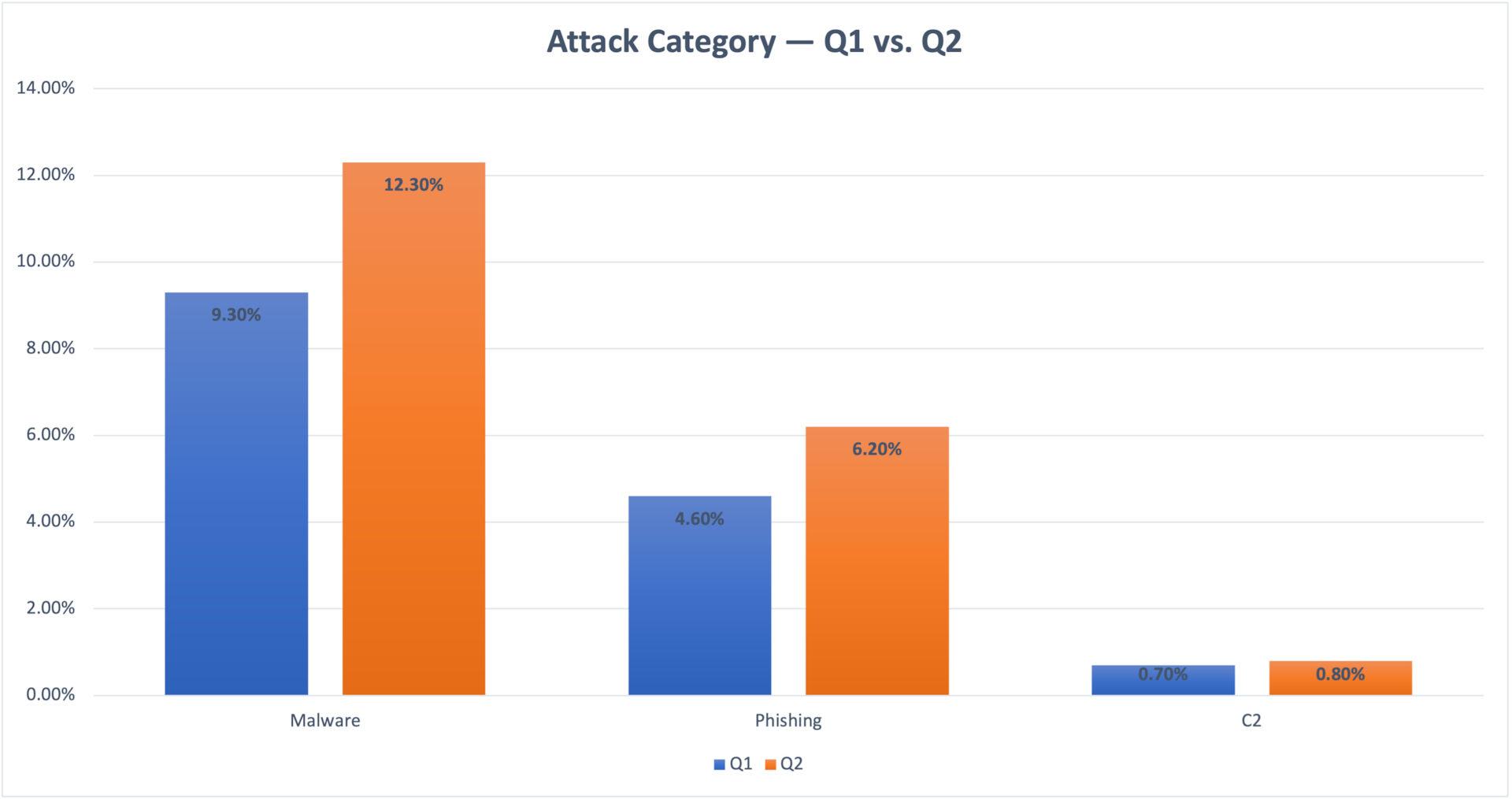
Fig. 1: Devices exposed to threats — Q1 vs. Q2 Fig. 1: Devices exposed to threats — Q1 vs. Q2

In Figure 2, we can see that of the 12.3% potentially compromised devices, 63% were exposed to threats associated with malware activity, 32% with phishing, and 5% with C2. Access to malware-associated domains does not guarantee that these devices were actually compromised, but provides a strong indication of increased potential risk if the threat wasn’t properly mitigated. However, access to C2-associated domains indicates that the device is most likely compromised and is communicating with the C2 server. This can often explain why the incidence of C2 is lower when compared with malware numbers.
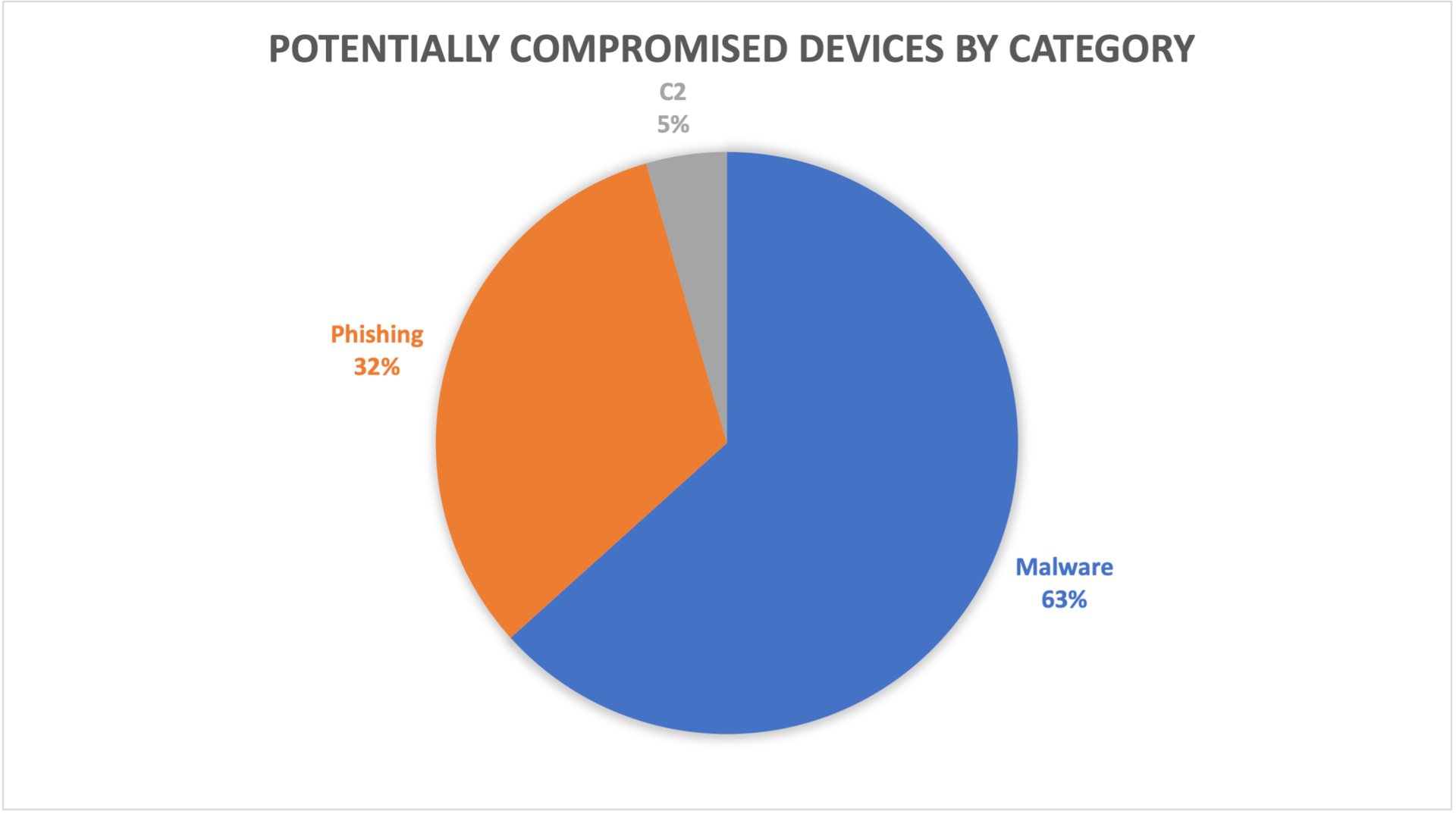
Fig. 2: Potentially compromised devices by category Fig. 2: Potentially compromised devices by category

Phishing attack campaigns 

By looking into the brands that are being abused and mimicked by phishing scams in Q2 2022, categorized by brand industry and number of victims, we can see that high tech and financial brands led with 36% and 47%, respectively (Figure 3). These leading phishing industry categories are consistent with Q1 2022 results, in which high tech and financial brands were the leading categories, with 32% and 31%, respectively. 
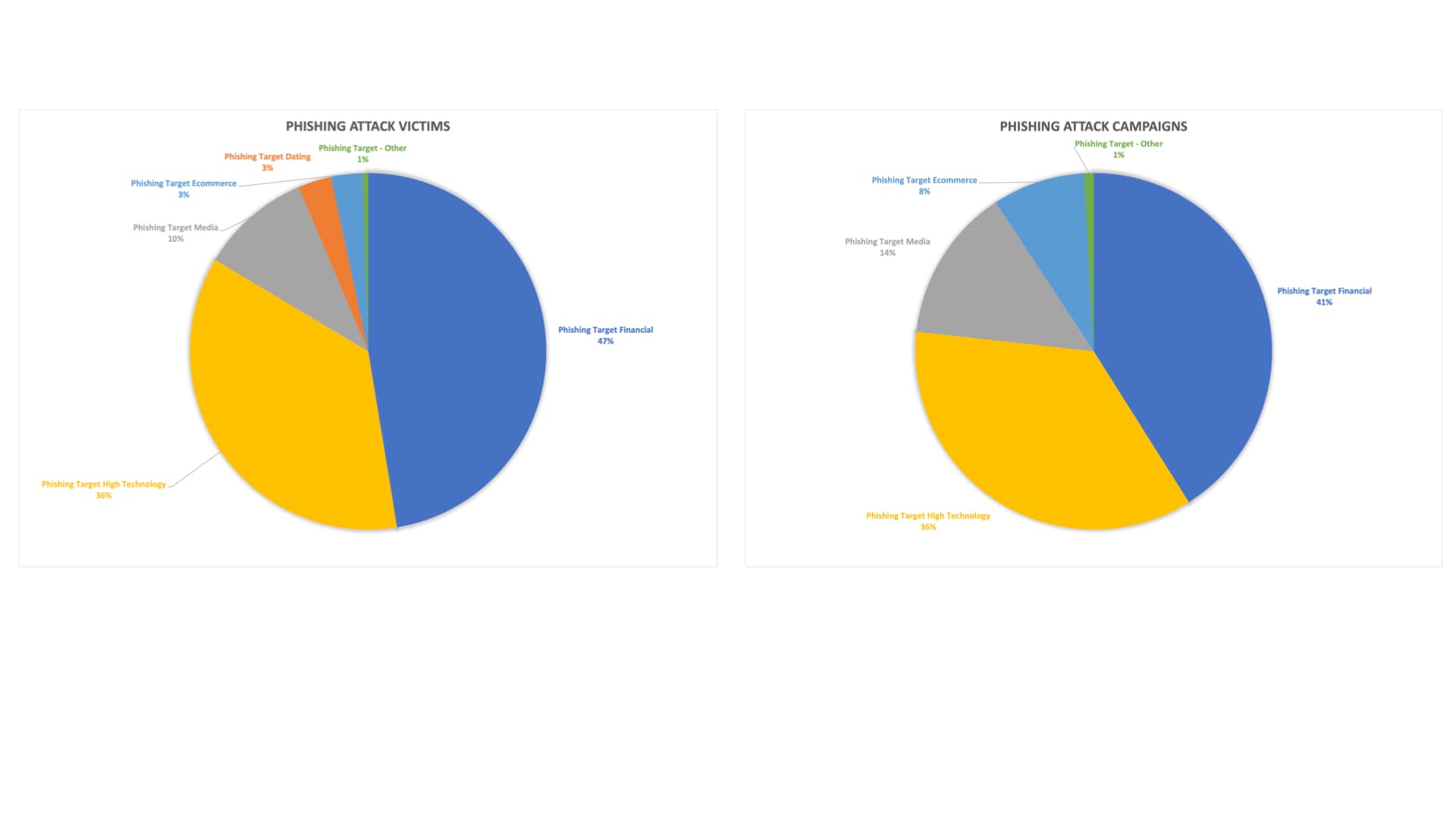
Fig. 3: Phishing victims and phishing campaigns by abused brands Fig. 3: Phishing victims and phishing campaigns by abused brands

When taking a different view on the phishing landscape–targeted industries by counting the number of attack campaigns being launched over Q2 2022, we can see that high tech and financial brands are still leading, with 36% and 41%, respectively (Figure 3). The correlation between leading targeted brands when it comes to number of attacks and number of victims is evidence that threat actors’ efforts and resources are, unfortunately, effectively working to achieve their desired outcome.

Akamai’s research does not have any visibility into the distribution channels used to deliver the monitored phishing attacks that led to victims clicking on a malicious link and ending up on the phishing landing page. Yet the strong correlation between different brand segments by number of attack campaigns and the number of victims seems to indicate that the volume of attacks is effective and leads to a similar trend in the number of victims. The correlation might also indicate that the distribution channels used have minimal effect on attack outcome, and it is all about the volume of attacks that lead to the desired success rates.

Taking a closer look at phishing attacks by categorization of attack campaigns — consumers vs. business targeted accounts— we can see that consumer attacks are the most dominant, with 80.7% of the attack campaigns (Figure 4). This domination is driven by the massive demand for consumers’ compromised accounts in dark markets that are then used to launch fraud-related second-phase attacks. However, even with only 19.3% of the attack campaigns, attacks against business accounts should not be considered marginal, as these kinds of attacks are usually more targeted and have greater potential for significant damage. Attacks that target business accounts may lead to a company’s network being compromised with malware or ransomware, or to confidential information being leaked. An attack that begins with an employee clicking a link in a phishing email can end up with the business suffering significant financial and reputational damages.
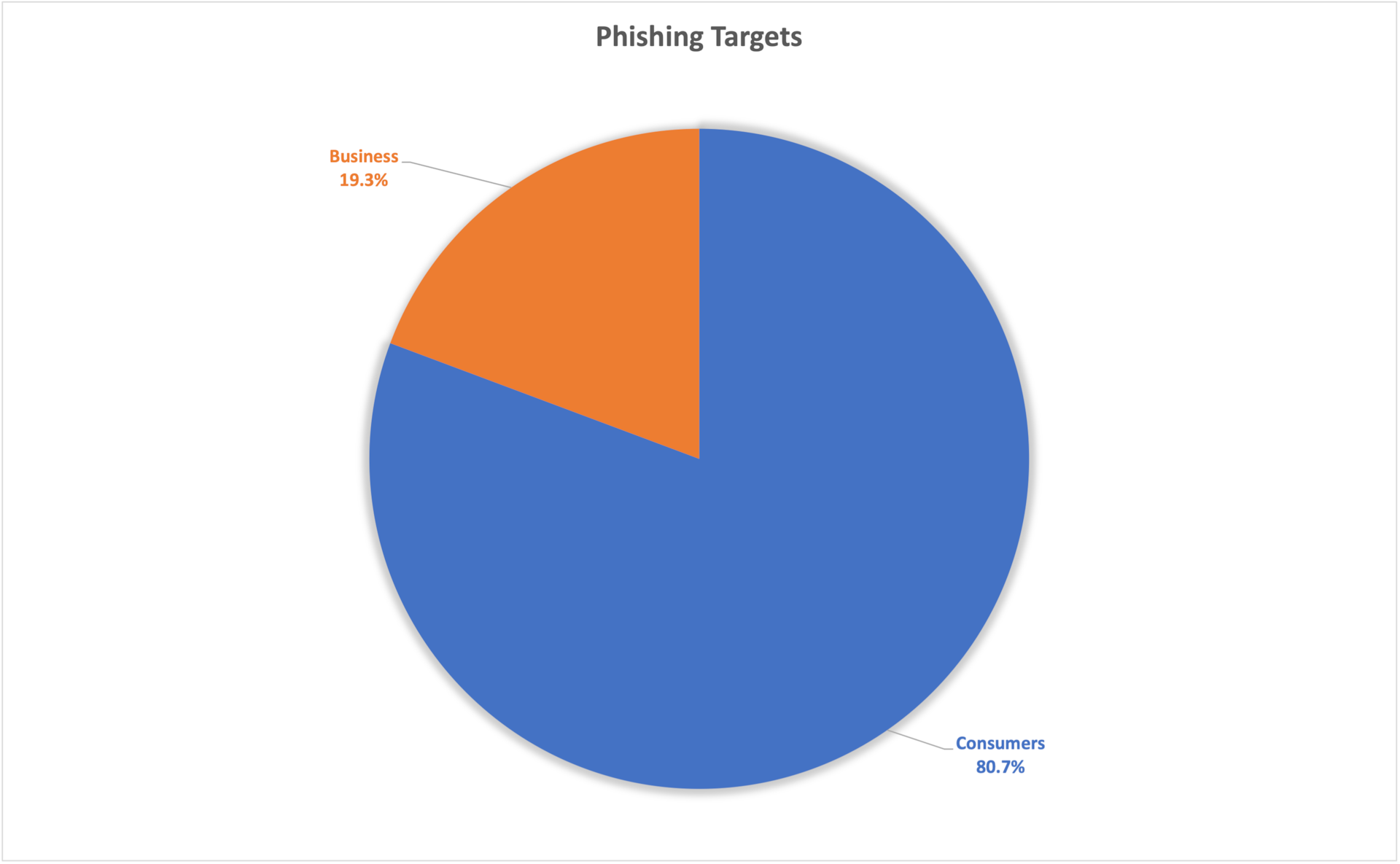
Fig. 4: Phishing targeted accounts — consumers vs. business  Fig. 4: Phishing targeted accounts — consumers vs. business

Phishing toolkits 

Phishing attacks are an extremely common vector that have been used for many years. The potential impacts and risks involved are well-known to most internet users. However, phishing is still a highly relevant and dangerous attack vector that affects thousands of people and businesses daily. Research conducted by Akamai explains some of the reasons for this phenomenon, and focuses on the phishing toolkits and their role in making phishing attacks effective and relevant. 

Phishing toolkits enable rapid and easy creation of fake websites that mimic known brands. Phishing toolkits enable even non–technically gifted scammers to run phishing scams, and in many cases are being used to create distributed and large-scale attack campaigns. The low cost and availability of these toolkits explains the increasing numbers of phishing attacks that have been seen in the past few years. 

According to Akamai’s research that tracked 290 different phishing toolkits being used in the wild, 1.9% of the tracked kits were reused on at least 72 distinct days over Q2 2022 (Figure 5). Further, 49.6% of the kits were reused for at least five days, and when looking into all the tracked kits, we can see that all of them were reused no fewer than three distinct days over Q2 2022.
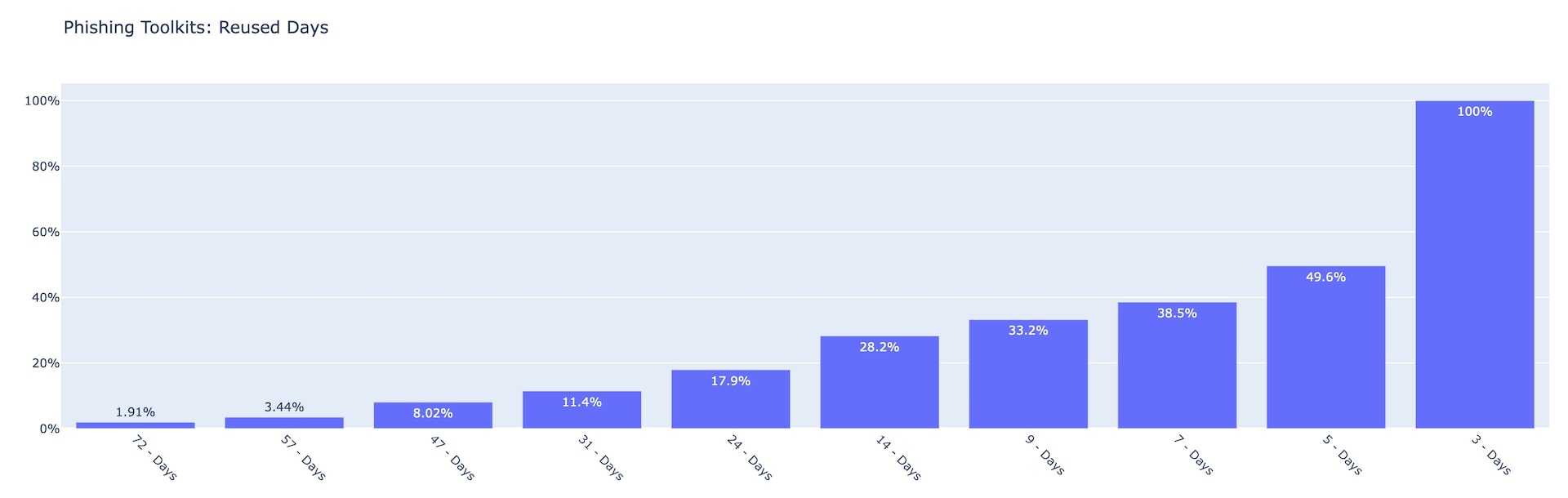
Fig. 5: Phishing toolkits by number of reused days Q2 2022 Fig. 5: Phishing toolkits by number of reused days Q2 2022

The numbers showing the heavy reuse phenomenon of the observed phishing kits shed some light on the phishing threat landscape and the scale involved, creating an overwhelming challenge to defenders. Behind the reuse of phishing kits are factories and economic forces that drive the phishing landscape. Those forces include developers who create phishing kits that mimic known brands, later to be sold or shared among threat actors to be reused over and over again with very minimal effort.

Further analysis on the most reused kits in Q2 2022, counting the number of different domains used to deliver each kit, shows that the Kr3pto toolkit was the one most frequently used and was associated with more than 500 domains (Figure 6). The tracked kits are labeled by the name of the brand being abused or by a generic name representing the kit developer signature or kit functionality.

In the case of Kr3pto, the actor behind the phishing kit is a developer who builds and sells unique kits that target financial institutions and other brands. In some cases, these kits target financial firms in the United Kingdom, and they bypass MFA. This evidence also shows that this phishing kit that was initially created more than three years ago is still highly active and effective and being used intensively in the wild.
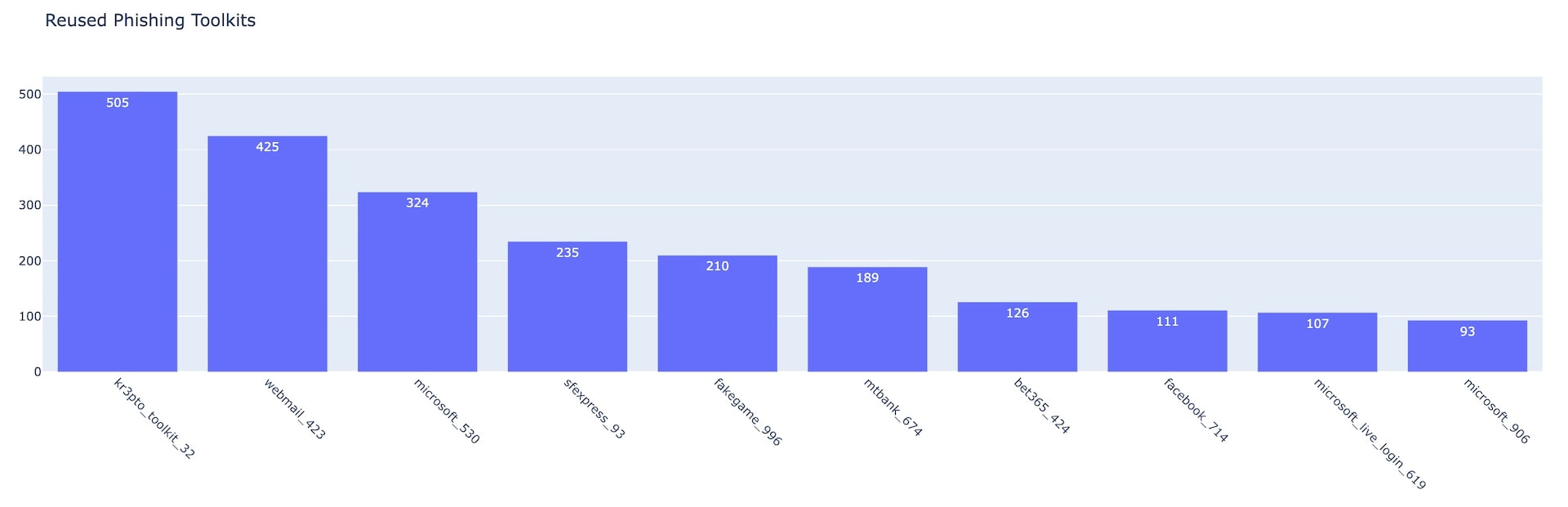
Fig. 6: Top 10 reused phishing toolkits  Fig. 6: Top 10 reused phishing toolkits

The phishing economy is growing, kits are becoming easier to develop and deploy, and the web is full of abandoned, ready-to-be-abused websites and vulnerable servers and services. Criminals capitalize on these weaknesses to establish a foothold that enables them to victimize thousands of people and businesses daily.

The growing industrial nature of phishing kit development and sales (in which new kits are developed and released within hours) and the clear split between creators and users means this threat isn’t going anywhere anytime soon. The threat posed by phishing factories isn’t just focused on the victims who risk having valuable accounts compromised and their personal information sold to criminals — phishing is also a threat to brands and their stakeholders.

The life span of a typical phishing domain is measured in hours, not days. Yet new techniques and developments by the phishing kit creators are expanding these life spans little by little, and it’s enough to keep the victims coming and the phishing economy moving. 

Summary

This type of research is necessary in the fight to keep our customers safer online. We will continue to monitor these threats and report on them to keep the industry informed.

The best way to stay up to date on this and other research pieces from the Akamai team is to follow Akamai Security Research on Twitter.

Source :
https://www.akamai.com/blog/security-research/q2-dns-akamai-insights
Mitigating Log4j Abuse Using Akamai Guardicore Segmentation

Executive summary

A critical remote code-execution vulnerability (CVE-2021-44228) has been publicly disclosed in Log4j, an open-source logging utility that’s used widely in applications, including many utilized by large enterprise organizations.

The vulnerability allows threat actors to exfiltrate information from, and execute malicious code on, systems running applications that utilize the library by manipulating log messages. There already are reports of servers performing internet-wide scans in attempts to locate vulnerable servers, and our threat intelligence teams are seeing attempts to exploit this vulnerability at alarming volumes. Log4j is incorporated into many popular frameworks and many Java applications, making the impact widespread.

Akamai Guardicore Segmentation is well positioned to address this vulnerability in different ways. It’s highly recommended that organizations update Log4j to its latest version- 2.16.0. Due to the rapidly escalating nature of this vulnerability, Akamai teams will continue to develop and deploy mitigation measures in order to support our customers.

As a follow up to Akamai’s recent post we wanted to provide more detail on how organizations can leverage  Akamai Guardicore Segmentation features to help address log4j exposure.

Log4j vulnerability: scope and impact

Log4j is a Java-based open-source logging library. On December 9, 2021, a critical vulnerability involving unauthenticated remote code execution (CVE-2021-44228) in Log4j was reported, causing concern due to how commonly Log4j is used. In addition to being used directly in a large multitude of applications, Log4j is also incorporated into a host of popular frameworks, including Apache Struts2, Apache Solr, Apache Druid, and Apache Flink.

Although Akamai first observed exploit attempts on the Log4j vulnerability on December 9th, following the widespread publication of the incident, we are now seeing evidence suggesting it could have been around for months. Since widespread publication of the vulnerability, we have seen multiple variants seeking to exploit this vulnerability, at a sustained volume of attack traffic at around 2M exploit requests per hour. The speed at which the variants are evolving is unprecedented.

A compromised machine would allow a threat actor to remotely provide a set of commands which Log4j executes. An attacker would have the ability to run arbitrary commands inside a server. This can allow an attacker to compromise a vulnerable system – including those that might be secured deep inside of a network with no direct access to the internet.

Akamai’s security teams have been monitoring attackers attempting to use Log4j in recent days. Other than the increase in attempted exploitation, Akamai researchers are also seeing attackers using a multitude of tools and attack techniques to get vulnerable components to log malicious content, in order to get remote code execution. This is indicative of threat actors’ ability to exploit a new vulnerability, and the worse the vulnerability is, the quicker they will act.

Mitigating Log4j abuse using Akamai Guardicore Segmentation

Customers using Akamai Guardicore Segmentation can leverage its deep, process level visibility to identify vulnerable applications and potential security risks in the environment. They can then use it to enact precise control over network traffic in order to stop attempted attacks on vulnerable systems, without disruptions to normal business operations. 

Guardicore Hunt customers have their environments monitored and investigated continuously by a dedicated team of security researchers. Alerts on security risks and suggested mitigation steps are immediately sent.

If you’d like to hear more about Akamai Guardicore Segmentation, read more or contact us.

What’s under threat: identify vulnerable Java processes and Log4j abuse

In order to protect against potential Log4j abuse, it is necessary to first identify potentially exploitable processes. This requires deep visibility into network traffic at the process level, which is provided by the Reveal and Insight features of Akamai Guardicore Segmentation. Precise visibility into internet connections and traffic at the process level allows us to see clearly what mitigation steps need to be taken, and visibility tools with historical data are pivotal in helping to prevent disruption to business operations.

Identify internet connected Java applications: using Reveal Explore Map, create a map for the previous week, and filter by java applications- such as tomcat, elastic, logstash- and by applications that have connections to/from the internet. Using this map, you can now see which assets are under potential threat. While this won’t yet identify Log4j applications, this can give you an idea of which machines to prioritize in your mitigation process.

Create a historical map to analyze normal communication patterns: using Reveal Explore Map, create a historical map of previous weeks (excluding the time since Log4j was reported) to view and learn normal communication patterns. Use this information to identify legitimate communications, and respond without disrupting the business. For example, a historical map might indicate what network connections exist under normal circumstances, those could be allowed, while other connections blocked or alerted on. Additionally, compare and contrast with a more recent map to identify anomalies.

Use reveal explore map to identify legitimate communications, and respond without disrupting the business.

Identify applications vulnerable to Log4j abuse: in the query section below, use Query 1 with Insight queries to identify assets that are running Java applications which have Log4j jar files in their directories. This query should return all Log4j packages in your environment, allowing you to assess and address any mitigation steps needed. To better prioritize exposed machines, cross reference the information with the Reveal Explore Map described previously.

Note that this query identifies Log4j packages that exist in the Java process current working directory or sub-directories.

Detect potential exploitation attempts in Linux logs: run an Insight query using YARA signature rule (Query 2, provided below in the query section) to search for known Log4j IoCs in the logs of linux machines. This can help you identify whether you’ve been attacked.

Note, a negative result does not necessarily mean that no attack exists, as this is only one of many indicators.

Stopping the attack: using Guardicore Segmentation to block malicious IoCs and attack vectors

It is imperative to be able to take action, once vulnerable applications have been identified. While patching is underway, Akamai Guardicore Segmentation offers a multitude of options for alerting on, stopping and preventing potential attacks. Critically, a solution with detailed and precise control over network communication and traffic is required to be able to surgically block or isolate attack vectors, with minimal to no disruption to normal business functions.

Automatically block IoC’s with Threat Intelligence Firewall (TIFW) and DNS Security: Akamai security teams are working around the clock to identify IPs and Domains used for Log4j exploitation. Customers who have these features turned on can expect a constantly updated list of IoCs to be blocked, preventing Log4j being used to download malicious payloads. Note that TIFW can be set to alert or block, please ensure it’s configured correctly. DNS Security is available from V41 onwards. The IoCs are also available on the Guardicore Threat Intel Repository and Guardicore Reputation Service.

Fully quarantine compromised servers: if compromised machines are identified during your investigation, use Akamai Guardicore Segmentation to isolate attacked/vulnerable servers from the rest of your network. Leverage built-in templates to easily enable deployment of segmentation policy to mitigate attacks.

Block inbound and outbound traffic to vulnerable assets: as a precautionary measure, you may also choose to block traffic to all machines identified with an unpatched version of Log4j, until patching is completed. Using a historical map of network traffic can help you limit the impact on business operations.

Create block rules for outgoing traffic from Java applications to the internet: if necessary, all internet-connected Java applications revealed in previous steps can be blocked from accessing the internet, as an additional precaution, until patching is complete.

Search queries

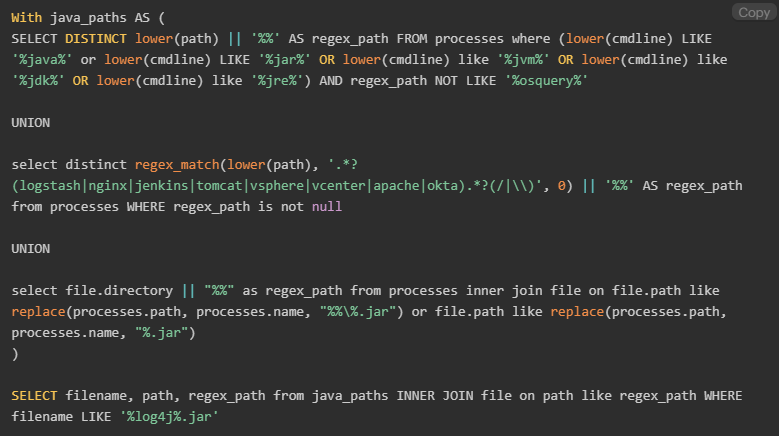
Query 1: To Identify assets that are running Java applications, which also have a Log4j jar file under their directories, run the following Insight query:

This query identifies assets that are running Java applications, which also have a Log4j jar file under their directories.

Query 2: To detect potential exploitation attempts, run an Insight query using YARA signature rules (our thanks to Florian Roth who published the original rule): 

SELECT path, count FROM yara WHERE path LIKE '/var/log/%%' AND sigrule = "rule EXPL_Log4j_CallBackDomain_IOCs_Dec21_1 {
strings:
$xr1 = /\b(ldap|rmi):\/\/([a-z0-9\.]{1,16}\.bingsearchlib\.com|[a-z0-9\.]{1,40}\.interact\.sh|[0-9]{1,3}\.[0-9]{1,3}\.[0-9]{1,3}\.[0-9]{1,3}):[0-9]{2,5}\/([aZ]|ua|Exploit|callback|[0-9]{10}|http443useragent|http80useragent)\b/
condition:
1 of them
}
rule EXPL_JNDI_Exploit_Patterns_Dec21_1 {
strings:
$ = {22 2F 42 61 73 69 63 2F 43 6F 6D 6D 61 6E 64 2F 42 61 73 65 36 34 2F 22}
$ = {22 2F 42 61 73 69 63 2F 52 65 76 65 72 73 65 53 68 65 6C 6C 2F 22}
$ = {22 2F 42 61 73 69 63 2F 54 6F 6D 63 61 74 4D 65 6D 73 68 65 6C 6C 22}
$ = {22 2F 42 61 73 69 63 2F 4A 65 74 74 79 4D 65 6D 73 68 65 6C 6C 22}
$ = {22 2F 42 61 73 69 63 2F 57 65 62 6C 6F 67 69 63 4D 65 6D 73 68 65 6C 6C 22}
$ = {22 2F 42 61 73 69 63 2F 4A 42 6F 73 73 4D 65 6D 73 68 65 6C 6C 22}
$ = {22 2F 42 61 73 69 63 2F 57 65 62 73 70 68 65 72 65 4D 65 6D 73 68 65 6C 6C 22}
$ = {22 2F 42 61 73 69 63 2F 53 70 72 69 6E 67 4D 65 6D 73 68 65 6C 6C 22}
$ = {22 2F 44 65 73 65 72 69 61 6C 69 7A 61 74 69 6F 6E 2F 55 52 4C 44 4E 53 2F 22}
$ = {22 2F 44 65 73 65 72 69 61 6C 69 7A 61 74 69 6F 6E 2F 43 6F 6D 6D 6F 6E 73 43 6F 6C 6C 65 63 74 69 6F 6E 73 31 2F 44 6E 73 6C 6F 67 2F 22}
$ = {22 2F 44 65 73 65 72 69 61 6C 69 7A 61 74 69 6F 6E 2F 43 6F 6D 6D 6F 6E 73 43 6F 6C 6C 65 63 74 69 6F 6E 73 32 2F 43 6F 6D 6D 61 6E 64 2F 42 61 73 65 36 34 2F 22}
$ = {22 2F 44 65 73 65 72 69 61 6C 69 7A 61 74 69 6F 6E 2F 43 6F 6D 6D 6F 6E 73 42 65 61 6E 75 74 69 6C 73 31 2F 52 65 76 65 72 73 65 53 68 65 6C 6C 2F 22}
$ = {22 2F 44 65 73 65 72 69 61 6C 69 7A 61 74 69 6F 6E 2F 4A 72 65 38 75 32 30 2F 54 6F 6D 63 61 74 4D 65 6D 73 68 65 6C 6C 22}
$ = {22 2F 54 6F 6D 63 61 74 42 79 70 61 73 73 2F 44 6E 73 6C 6F 67 2F 22}
$ = {22 2F 54 6F 6D 63 61 74 42 79 70 61 73 73 2F 43 6F 6D 6D 61 6E 64 2F 22}
$ = {22 2F 54 6F 6D 63 61 74 42 79 70 61 73 73 2F 52 65 76 65 72 73 65 53 68 65 6C 6C 2F 22}
$ = {22 2F 54 6F 6D 63 61 74 42 79 70 61 73 73 2F 54 6F 6D 63 61 74 4D 65 6D 73 68 65 6C 6C 22}
$ = {22 2F 54 6F 6D 63 61 74 42 79 70 61 73 73 2F 53 70 72 69 6E 67 4D 65 6D 73 68 65 6C 6C 22}
$ = {22 2F 47 72 6F 6F 76 79 42 79 70 61 73 73 2F 43 6F 6D 6D 61 6E 64 2F 22}
$ = {22 2F 57 65 62 73 70 68 65 72 65 42 79 70 61 73 73 2F 55 70 6C 6F 61 64 2F 22}
condition:
1 of them
}
rule EXPL_Log4j_CVE_2021_44228_JAVA_Exception_Dec21_1 {
strings:
$xa1 = {22 68 65 61 64 65 72 20 77 69 74 68 20 76 61 6C 75 65 20 6F 66 20 42 61 64 41 74 74 72 69 62 75 74 65 56 61 6C 75 65 45 78 63 65 70 74 69 6F 6E 3A 20 22}
$sa1 = {22 2E 6C 6F 67 34 6A 2E 63 6F 72 65 2E 6E 65 74 2E 4A 6E 64 69 4D 61 6E 61 67 65 72 2E 6C 6F 6F 6B 75 70 28 4A 6E 64 69 4D 61 6E 61 67 65 72 22}
$sa2 = {22 45 72 72 6F 72 20 6C 6F 6F 6B 69 6E 67 20 75 70 20 4A 4E 44 49 20 72 65 73 6F 75 72 63 65 22}
condition:
$xa1 or all of ($sa*)
}
rule EXPL_Log4j_CVE_2021_44228_Dec21_Soft {
strings:
$ = {22 24 7B 6A 6E 64 69 3A 6C 64 61 70 3A 2F 22}
$ = {22 24 7B 6A 6E 64 69 3A 72 6D 69 3A 2F 22}
$ = {22 24 7B 6A 6E 64 69 3A 6C 64 61 70 73 3A 2F 22}
$ = {22 24 7B 6A 6E 64 69 3A 64 6E 73 3A 2F 22}
$ = {22 24 7B 6A 6E 64 69 3A 69 69 6F 70 3A 2F 22}
$ = {22 24 7B 6A 6E 64 69 3A 68 74 74 70 3A 2F 22}
$ = {22 24 7B 6A 6E 64 69 3A 6E 69 73 3A 2F 22}
$ = {22 24 7B 6A 6E 64 69 3A 6E 64 73 3A 2F 22}
$ = {22 24 7B 6A 6E 64 69 3A 63 6F 72 62 61 3A 2F 22}
condition:
1 of them
}
rule EXPL_Log4j_CVE_2021_44228_Dec21_OBFUSC {
strings:
$x1 = {22 24 25 37 42 6A 6E 64 69 3A 22}
$x2 = {22 25 32 35 32 34 25 32 35 37 42 6A 6E 64 69 22}
$x3 = {22 25 32 46 25 32 35 32 35 32 34 25 32 35 32 35 37 42 6A 6E 64 69 25 33 41 22}
$x4 = {22 24 7B 6A 6E 64 69 3A 24 7B 6C 6F 77 65 72 3A 22}
$x5 = {22 24 7B 3A 3A 2D 6A 7D 24 7B 22}
condition:
1 of them
}
rule EXPL_Log4j_CVE_2021_44228_Dec21_Hard {
strings:
$x1 = /\$\{jndi:(ldap|ldaps|rmi|dns|iiop|http|nis|nds|corba):\/[\/]?[a-z-\.0-9]{3,120}:[0-9]{2,5}\/[a-zA-Z\.]{1,32}\}/
$fp1r = /(ldap|rmi|ldaps|dns):\/[\/]?(127\.0\.0\.1|192\.168\.|172\.[1-3][0-9]\.|10\.)/
condition:
$x1 and not 1 of ($fp*)
}
rule SUSP_Base64_Encoded_Exploit_Indicators_Dec21 {
strings:
/* curl -s */
$sa1 = {22 59 33 56 79 62 43 41 74 63 79 22}
$sa2 = {22 4E 31 63 6D 77 67 4C 58 4D 67 22}
$sa3 = {22 6A 64 58 4A 73 49 43 31 7A 49 22}
/* |wget -q -O- */
$sb1 = {22 66 48 64 6E 5A 58 51 67 4C 58 45 67 4C 55 38 74 49 22}
$sb2 = {22 78 33 5A 32 56 30 49 43 31 78 49 43 31 50 4C 53 22}
$sb3 = {22 38 64 32 64 6C 64 43 41 74 63 53 41 74 54 79 30 67 22}
condition:
1 of ($sa*) and 1 of ($sb*)
}
rule SUSP_JDNIExploit_Indicators_Dec21 {
strings:
$xr1 = /(ldap|ldaps|rmi|dns|iiop|http|nis|nds|corba):\/\/[a-zA-Z0-9\.]{7,80}:[0-9]{2,5}\/(Basic\/Command\/Base64|Basic\/ReverseShell|Basic\/TomcatMemshell|Basic\/JBossMemshell|Basic\/WebsphereMemshell|Basic\/SpringMemshell|Basic\/Command|Deserialization\/CommonsCollectionsK|Deserialization\/CommonsBeanutils|Deserialization\/Jre8u20\/TomcatMemshell|Deserialization\/CVE_2020_2555\/WeblogicMemshell|TomcatBypass|GroovyBypass|WebsphereBypass)\//
condition:
filesize < 100MB and $xr1
}
rule SUSP_EXPL_OBFUSC_Dec21_1{
strings:
/* ${lower:X} - single character match */
$ = { 24 7B 6C 6F 77 65 72 3A ?? 7D }
/* ${upper:X} - single character match */
$ = { 24 7B 75 70 70 65 72 3A ?? 7D }
/* URL encoded lower - obfuscation in URL */
$ = {22 24 25 37 62 6C 6F 77 65 72 3A 22}
$ = {22 24 25 37 62 75 70 70 65 72 3A 22}
$ = {22 25 32 34 25 37 62 6A 6E 64 69 3A 22}
$ = {22 24 25 37 42 6C 6F 77 65 72 3A 22}
$ = {22 24 25 37 42 75 70 70 65 72 3A 22}
$ = {22 25 32 34 25 37 42 6A 6E 64 69 3A 22}
condition:
1 of them
}"
AND count > 0 AND path NOT LIKE "/var/log/gc%"

Source :
https://www.akamai.com/blog/security/recommendations-for-log4j-mitigation

Record-Breaking DDoS Attack in Europe

They’re back! 

Or, more accurately, the cybercriminals responsible for July’s record-setting European DDoS attack may have never left. In the weeks following our coverage of the previous incident, the victim (a customer based in Eastern Europe) has been bombarded relentlessly with sophisticated distributed denial-of-service (DDoS) attacks, ultimately paving the way for a new European packets per second (pps) DDoS record.

On Monday, September 12, 2022, Akamai successfully detected and mitigated the now-largest DDoS attack ever launched against a European customer on the Prolexic platform, with attack traffic abruptly spiking to 704.8 Mpps in an aggressive attempt to cripple the organization’s business operations.

Attack breakdown

Adversaries are constantly evolving their techniques, tactics, and procedures to evade detection and maximize disruption, as demonstrated by this ongoing attack campaign. Let’s break down and compare the two record-setting events. 

 July AttackSeptember Attack
Peak pps659.6 Mpps704.8 Mpps
Cumulative Attacks75201
IPs Targeted5121813
VectorUDPUDP
Distribution1 location6 locations
Date of AttackJuly 21, 2022September 12, 2022
Top Scrubbing LocationsHKG, LON, TYOHKG, TYO, LON

Prior to June 2022, this customer only saw attack traffic against its primary data center; however, they recognized the importance of a comprehensive defensive strategy early on, and onboarded their 12 remaining global data centers to the Prolexic platform for peace of mind. This proved highly fortuitous, as the attack campaign expanded unexpectedly, hitting six different global locations, from Europe to North America. These events reflect a growing trend in which adversaries are increasingly hitting deep-reconnaissance targets. 

Attack mitigation

To thwart an attack of this magnitude and complexity, Akamai leveraged a balanced combination of automated and human mitigation: 99.8% of the assault was pre-mitigated thanks to the customer’s proactive defensive posture, a preemptive security measure implemented by the Akamai Security Operations Command Center (SOCC). Remaining attack traffic and follow-up attacks leveraging different vectors were swiftly mitigated by our frontline security responders. In the wake of increasingly sophisticated DDoS attacks worldwide, many businesses struggle with the staffing of internal security resources, and instead look to Akamai’s SOCC to augment and act as an extension of their incident response team.

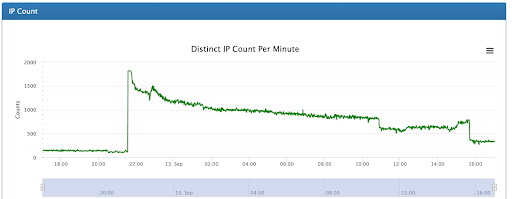
The attackers’ command and control system had no delay in activating the multidestination attack, which escalated in 60 seconds from 100 to 1,813 IPs active per minute. Those IPs were spread across eight distinct subnets in six distinct locations. An attack this heavily distributed could drown an underprepared security team in alerts, making it difficult to assess the severity and scope of the intrusion, let alone fight the attack. Sean Lyons, Senior Vice President and General Manager of Infrastructure Security says, “Akamai Prolexic’s DDoS specialization culture, focus on customer infrastructure designs and history are rooted in defending the most complex, multifaceted attacks, and our platform is equipped with purpose-built tooling for rapid threat mitigation, even in the ‘fog of war.’ “

Akamai Prolexic’s DDoS specialization culture, focus on customer infrastructure designs and history are rooted in defending the most complex, multifaceted attacks, and our platform is equipped with purpose-built tooling for rapid threat mitigation, even in the ‘fog of war.

Sean Lyons, Senior Vice President and General Manager of Infrastructure Security
Distinct IP Count Per Minute.


Conclusion

Having a proven DDoS mitigation strategy and platform in place is imperative for shielding your business from downtime and disruption. Learn more about Akamai’s industry-leading DDoS solutions and how our advanced attack-fighting capabilities keeps organizations safe from increasingly sophisticated threats. 

Under attack? 

Click here for 24/7 emergency DDoS protection.

Guidance on minimizing DDoS risk

  • Immediately review and implement Cybersecurity and Infrastructure Security Agency (CISA) recommendations. 
  • Review critical subnets and IP spaces, and ensure that they have mitigation controls in place.
  • Deploy DDoS security controls in an always-on mitigation posture as a first layer of defense, to avoid an emergency integration scenario and to reduce the burden on incident responders. If you don’t have a trusted and proven cloud-based provider, get one now. 
  • Proactively pull together a crisis response team and ensure runbooks and incident response plans are up-to-date. For example, do you have a runbook to deal with catastrophic events? Are the contacts within the playbooks updated? A playbook that references outdated tech assets or people who have long left the company isn’t going to help.

For additional information on the steps you can take to protect your organization, please visit the following CISA resources: